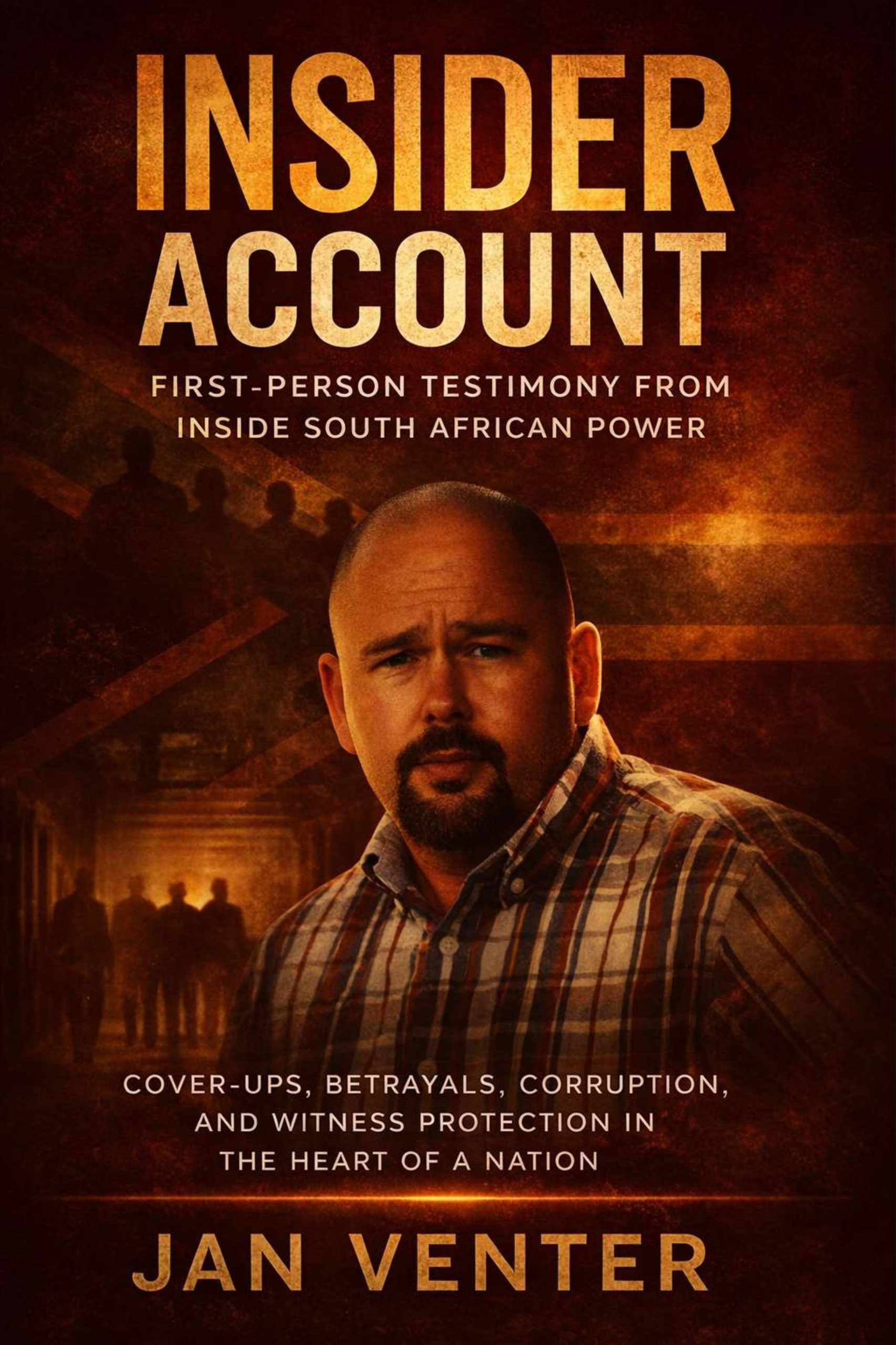
HAD THEY LISTENED, FEWER WOULD BE DEAD
WHY THIS ARCHIVE EXISTS
For years, South Africans have been assured that whistleblowers are “protected”, that witness-protection mechanisms are “being strengthened”, and that those who expose corruption will be kept safe. Presidents deliver speeches. Political parties issue statements. Committees convene. Reports are tabled. Yet on the ground, the reality has been the opposite: escalating risk, institutional paralysis, and an expanding trail of funerals.
Long before the most widely publicised whistleblower assassinations, detailed written warnings were delivered to the Presidency, the National Prosecuting Authority, specialised investigative units, senior prosecutors, political leadership, and multiple oversight bodies. These warnings were issued while the author of this archive was formally placed under state Witness Protection, living under threat and under an assumed identity.
This page consolidates the underlying documentary record: contemporaneous correspondence generated inside Witness Protection, contemporaneous media reporting, official political statements, and formal letters from law-enforcement leadership. Taken together, these materials demonstrate what was known, when it was known, and which institutions can no longer credibly claim ignorance.
Had decisive action followed the warnings when they were first raised, fewer whistleblowers would be dead today.
PRIMARY EVIDENTIARY RECORD
The primary-source documents underlying this page have been preserved in full. They consist of original correspondence, official letters, media records, and political statements exactly as they existed at the time. No document has been altered, edited, or rewritten.
For public-safety, legal, and evidentiary-control reasons, direct document links and media files have been removed from this public-facing HTML. The complete documentary record is preserved in a password-protected evidentiary annexure at the bottom of this page.
TABLOID NARRATIVE VS WRITTEN RECORD
Certain media coverage portrayed state Witness Protection as a lifestyle choice undertaken for financial benefit, followed by removal for alleged misconduct or instability. The contemporaneous written record generated from inside the programme directly contradicts that narrative.
| Tabloid Claims | Contemporaneous Written Record |
|---|---|
|
“Participation was motivated by financial gain.” “The lifestyle was enjoyed.” — Media narrative |
Written communications describe profound isolation, emotional strain, and prolonged family separation, emphasising voluntary cooperation motivated by safety concerns rather than benefit. |
|
“State funding was demanded for publicity activities.” — Media narrative |
No correspondence, email, or official record reflects any such demand. The allegation appears in commentary only, not in the documentary record. |
|
“Removal followed misconduct or instability.” — Media narrative |
The written record documents repeated complaints regarding internal leaks, escalating danger, and requests for enforcement of protection protocols — not instability. |
|
“Rules could not be followed.” — Media narrative |
Communications show repeated requests for officials to enforce existing rules and address internal failures within the system itself. |
PUBLIC OUTRAGE VS PRIVATE SILENCE
Following the assassination of a protected whistleblower linked to a national commission of inquiry, a major opposition party issued a public statement condemning the killing and demanding urgent reform of whistleblower protection. That statement forms part of the preserved record.
On the same day, a detailed private communication was sent to a senior legal figure within that party, reminding them that comparable warnings had already been delivered years earlier while the author was inside Witness Protection. The message was delivered and read. No response followed.
This contrast — public condemnation paired with private inaction — is not incidental. It reflects a recurring pattern in which institutional concern is expressed only after deaths occur, while earlier warnings are ignored when action could still have prevented harm.
WHEN THE PRESIDENCY PROMISES PROTECTION
Over multiple years, the head of state has publicly called for stronger protection for whistleblowers and witnesses. These assurances are widely reported and framed as evidence of political commitment to accountability.
What those public statements omit is the internal record: the written warnings delivered to the Presidency itself, identifying leaks, interference, and systemic failures that placed witnesses at real and immediate risk.
Those warnings did not trigger a decisive institutional reset. Structural weaknesses persisted. Years later, whistleblowers continued to be killed. Statements continued to be made. The funerals continued.
Rhetoric at a podium is easy.
Acting decisively when documented warnings arrive is harder.
IF THEY TRY AGAIN, THEY WILL FAIL AGAIN
This archive is published to correct the record after years of misrepresentation, endangerment, and scapegoating. When a person is falsely portrayed or defamed, that person has both a constitutional and moral right to vindicate themselves through primary evidence.
Any attempt to intimidate or retaliate for the disclosure of documented truth will rest entirely with those who constructed false narratives, leaked information, suppressed evidence, or weaponised state institutions to deflect accountability.
This disclosure seeks no favour, no benefit, no negotiation. It is not extortion. It is the lawful publication of documentary evidence in the public interest, undertaken to correct the record and reduce the risk of further harm.
All underlying archives are securely preserved outside South Africa. Contingency publication mechanisms exist beyond the control of the author of this page. Attempts to silence, suppress, or fabricate consequences will not succeed.
This disclosure is lawful. It is constitutional. And it cannot be undone.
THIS IS WHAT “WE DIDN’T KNOW” LOOKS LIKE
The material preserved in the evidentiary annexure is not opinion. It is the contemporaneous written record: emails, official correspondence, political statements, and media publications. Together, they show that multiple institutions were warned in detail long before the most recent whistleblower killings.
When future inquiries ask who knew, when they knew, and what they did, the answers are already documented. The record exists. It will not disappear.
Had they listened, fewer would be dead.
WHAT WAS WARNED ABOUT — AND WHAT WAS DONE INSTEAD
While the author of this archive was formally placed inside the state Witness Protection Programme, detailed written warnings were delivered to prosecutorial and investigative authorities regarding serious criminal conduct, institutional interference, and escalating risk to human life. These warnings were not speculative. They were contemporaneous, documented, and issued while the author was living under an assumed identity due to credible threats.
Those warnings did not trigger decisive investigation. Instead, the underlying criminal matter was terminated without ever being tested in open court. No witness was heard. No evidence was ventilated. The process ended administratively.
On 2 February 2026, years after those warnings were first raised, a formal written response was received explaining why prosecution had not proceeded. That response relied not on the full evidentiary record generated during the investigation, but on character assessments and reasoning external to the criminal file itself.
The contradiction between what was documented during the investigation and how the matter was later rationalised is now placed on the public record. It is preserved in full on a separate, secured page of this site, together with the contemporaneous correspondence that demonstrates what was known, when it was known, and how it was handled.
This is the point at which consequence must be acknowledged. When early warnings delivered from inside Witness Protection are ignored, dismissed, or administratively neutralised, harm does not disappear. It escalates. The public record now reflects that escalation.
This was not unforeseeable.
It was warned about.
It was documented.
And it was not acted upon.
The purpose of placing this summary here is not accusation. It is accountability. The detailed evidentiary trail, including the correspondence of February 2026, is preserved elsewhere on this site for lawful scrutiny by journalists, oversight bodies, and investigators.
ABOUT THE RESTRICTED EVIDENTIARY ANNEXURE
The evidentiary annexure below contains the complete primary-source documentary record underlying this page. It consists of original, contemporaneous correspondence and records generated directly between a protected witness and state authorities responsible for witness protection and prosecution oversight.
The materials include unredacted communications exchanged while the witness was formally placed inside the state Witness Protection Programme. As such, they contain sensitive operational detail, protected identities, internal email addresses, escalation pathways, and direct interactions with officials responsible for witness safety and prosecutorial administration.
Access to these documents is therefore restricted at this stage. This restriction is not imposed to conceal wrongdoing, suppress information, or shield institutions from scrutiny. It exists solely to prevent further harm, misinterpretation, or misuse of highly sensitive material that could endanger individuals or compromise ongoing accountability processes.
Controlled access is currently granted on request to investigative journalists, recognised oversight bodies, government institutions, and other demonstrably trustworthy stakeholders with a legitimate public-interest mandate. Each request is assessed individually.
The intention is not permanent restriction. Broader public access is anticipated once the safety, legal, and institutional risks associated with unrestricted release have been responsibly mitigated.
The record exists. It is preserved in full. Access is controlled for safety — not secrecy.
PASSWORD-PROTECTED EVIDENTIARY ANNEXURE
This annexure contains the complete primary-source documentary record underlying the public narrative on this page. All materials are original, contemporaneous, and unaltered. None are AI-generated.
Access is granted selectively to journalists, investigators, oversight bodies, and other legitimate stakeholders. Documents may not be copied, redistributed, or misused. Broader public access may follow at a later stage.