MATHEWS PHOSA, WITNESS TO POWER & THE EXPOSÉ RECORD: TWO VANTAGE POINTS. ONE PUBLIC TEST.
Two very different records of South African power collide here — and neither should be insulated from scrutiny. Mathews Phosa writes from formal political leadership in Witness to Power. Jan Venter’s Exposé trilogy comes from operational proximity outside elected office, then forces that lived account through two further tests: the surviving documents and the later institutional record.
This page is confined to public political history, published books, public employment descriptions, court records, journalism and the Exposé documentary archive. Public political careers, public statements, published memoirs and public litigation can be examined against the record. That scrutiny does not convert allegation into fact, and it does not open private family life or other private personal matters to publication here.
Biography is not allegation. A headline is not a job description. Testimony is not a finding. A judgment is not extended beyond what it decided. A memoir — whether written from the top or from below — does not get immunity from the surviving record. Exposé keeps those categories separate and applies the same test to Jan Venter.
WITNESS TO POWER AND EXPOSÉ LOOK AT POWER FROM DIFFERENT HEIGHTS
The strongest reason to read the two records together is precisely that they do not tell the same story from the same height. One comes from recognised political leadership; the other comes from operational proximity outside office and is then forced through documentary and institutional tests. The tension between those positions is not a weakness in the property. It is part of its editorial and dramatic value.
“THE BUTLER” BECAME THE HEADLINE. THE PUBLIC RECORD ITSELF IS BROADER.
The phrase matters because it remains part of the searchable history linking Mathews Phosa and Jan Venter. Exposé does not erase the label. It shows where it came from, what the same reporting also said, and why Venter disputes it as an accurate description of his work.
The headline shorthand
Mail & Guardian / amaBhungane used the “butler” description in a 2015 headline. Other outlets repeated the shorthand in later court reporting.
Open the 2015 reportThe same reporting said “house manager”
The Mail & Guardian article states that Venter worked part-time and later full-time as a house manager. Sowetan’s 2016 court report likewise identifies him in the body as Phosa’s former house manager.
Open the court reportVenter’s own record describes a wider role
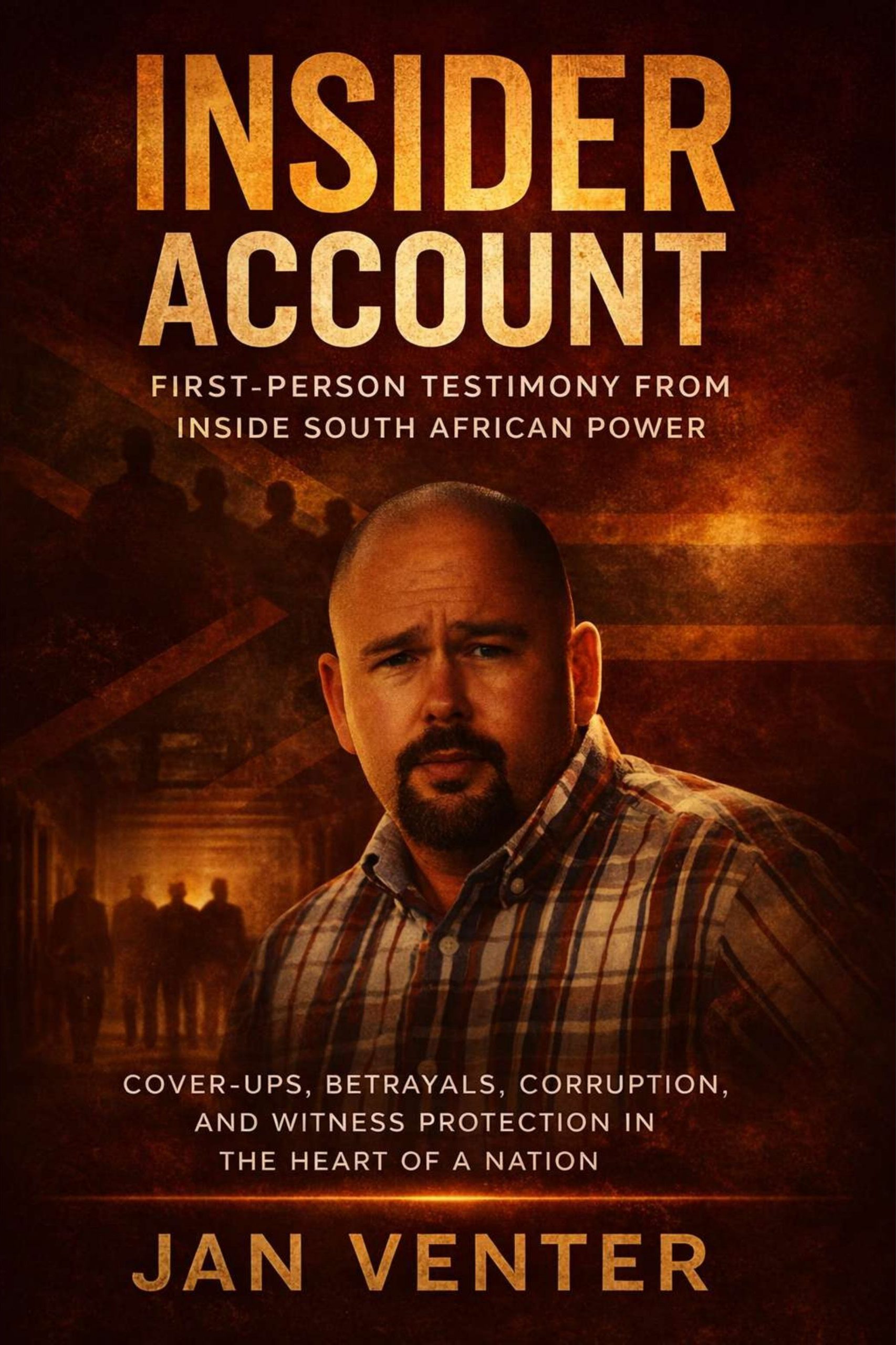
In INSIDER ACCOUNT, Venter describes moving from security branch management into access control, contractor coordination, logistics, security support, events and practical operational problem-solving. That is the basis on which he rejects “butler” as an accurate job description.
Explore INSIDER ACCOUNTFROM HI-TECH HAZYVIEW TO OPERATIONAL PROXIMITY
Venter’s account does not begin in politics. It begins in the private-security industry and a branch-management role in Hazyview.
Branch management
In his memoir, Venter says he ran the Hi-Tech Hazyview operation across guarding, armed response, complaints, collections, client retention, site inspections and branch discipline.
Security first
His initial connection to the Phosa environment arose through security responsibility and practical operational work, not through elected office or party employment.
Role expanded
Venter’s memoir describes the work later broadening into access, coordination, logistics, technical systems, security support and operational problem-solving.
Why the distinction matters
The difference between “butler”, “house manager” and an operations-heavy role is not cosmetic. It changes how readers understand the narrator’s proximity, access and vantage point.
WHAT THIS PAGE CAN ESTABLISH — AND WHAT IT DOES NOT TRY TO DO
The Mathews Phosa page is designed as a public-record and source page, not as a vehicle for private allegation. Its strength comes from a harder proposition: public power can be scrutinised, public claims can be compared, and neither prominence nor publication places a public record beyond examination.
MABUZA v PHOSA: THE JUDGMENT STAYS IN THE RECORD IN FULL CONTEXT
David Mabuza’s defamation claim against Mathews Phosa is one of the strongest public records connecting Phosa, Mabuza and Venter. Exposé does not use only the parts favourable to one narrator.
ONE LIVED RECORD. ONE DOCUMENTARY TEST. ONE INSTITUTIONAL AFTERMATH.
The Exposé trilogy is not three repetitions of one grievance and not a single narrator asking to be believed for 471,000 words. Each completed book performs a different evidentiary function — human, documentary and institutional — creating a property that escalates its own standard of proof as it moves forward.
THIS IS NOT A SINGLE-VERSION MEMOIR PROPERTY. THE CONFLICT IS BUILT INTO THE RECORD.
For publishers, literary agents, documentary teams and screen producers, the commercial value is not simply that Jan Venter knew a prominent political figure. It is that a completed three-book property places a participant account beside a published leadership memoir, years of public reporting, litigation, adverse findings, denials and a controlled documentary archive. The material arrives with tension already inside it — and with sources capable of testing that tension.
Completed Scale
Approximately 471,000 words across three completed manuscripts. A buyer is not being asked to finance the creation of the core story before discovering whether the material exists.
Two Vantage Points
Witness to Power approaches history from recognised political leadership. Exposé approaches overlapping public terrain from operational proximity outside office. That difference creates editorial friction rather than repetition.
Documentary Tension
Public reporting, court material, competing versions and adverse findings remain visible. The archive is not there merely to support the narrator; it can qualify or contradict him. That gives factual development a built-in verification engine.
Multiple Rights Routes
The property can be evaluated for publishing, documentary, film, television, audio, translation, territorial and international rights — as three books, a connected trilogy or a broader archive-led factual adaptation.
The commercial question is no longer whether there is enough material.
There are three completed manuscripts, a public record that predates them, a controlled archive and a clear dramatic architecture: access, rupture, documentary reckoning and institutional aftermath. The question for a serious buyer is which route into the property is strongest.
MATHEWS PHOSA, JAN VENTER & THE EXPOSÉ RECORD — FAQ
Who is Mathews Phosa?
Mathews Phosa is a South African lawyer and political figure who served as Premier of Mpumalanga and ANC Treasurer-General and was involved in the liberation struggle and constitutional negotiations.
What is Witness to Power?
Witness to Power is Mathews Phosa’s memoir, published by Penguin in 2024, recounting his political journey through liberation, exile, negotiation and senior political leadership.
Who is Jan Venter in relation to Mathews Phosa?
Public reporting identifies Venter as Phosa’s former house manager. Venter’s own memoir says the relationship developed from a Hazyview security-management role into broader operational, logistical and security responsibilities.
Was Jan Venter Mathews Phosa’s butler?
Several media headlines used “butler”. The same public reporting also called Venter a house manager. Venter disputes “butler” as inaccurate and describes a wider operations and security role in his memoir.
How does Exposé differ from Witness to Power?
Phosa writes from formal political leadership. Venter writes from operational proximity outside political office; Book Two then tests his account against records, and Book Three examines institutional handling.
Does Exposé claim every allegation is proven?
No. Exposé separates first-person recollection, documentary fact, allegation, denial, reporting, testimony and judicial findings. Where the record is adverse to Venter, that record remains visible.
Follow the sources. Then look at the property.
Read the Mathews Phosa public biography, the publisher record for Witness to Power, the High Court judgment, the journalism that created the “butler” label and the Exposé source index. Then assess what three completed manuscripts, a controlled archive and two sharply different vantage points can become in publishing, documentary and screen development.