
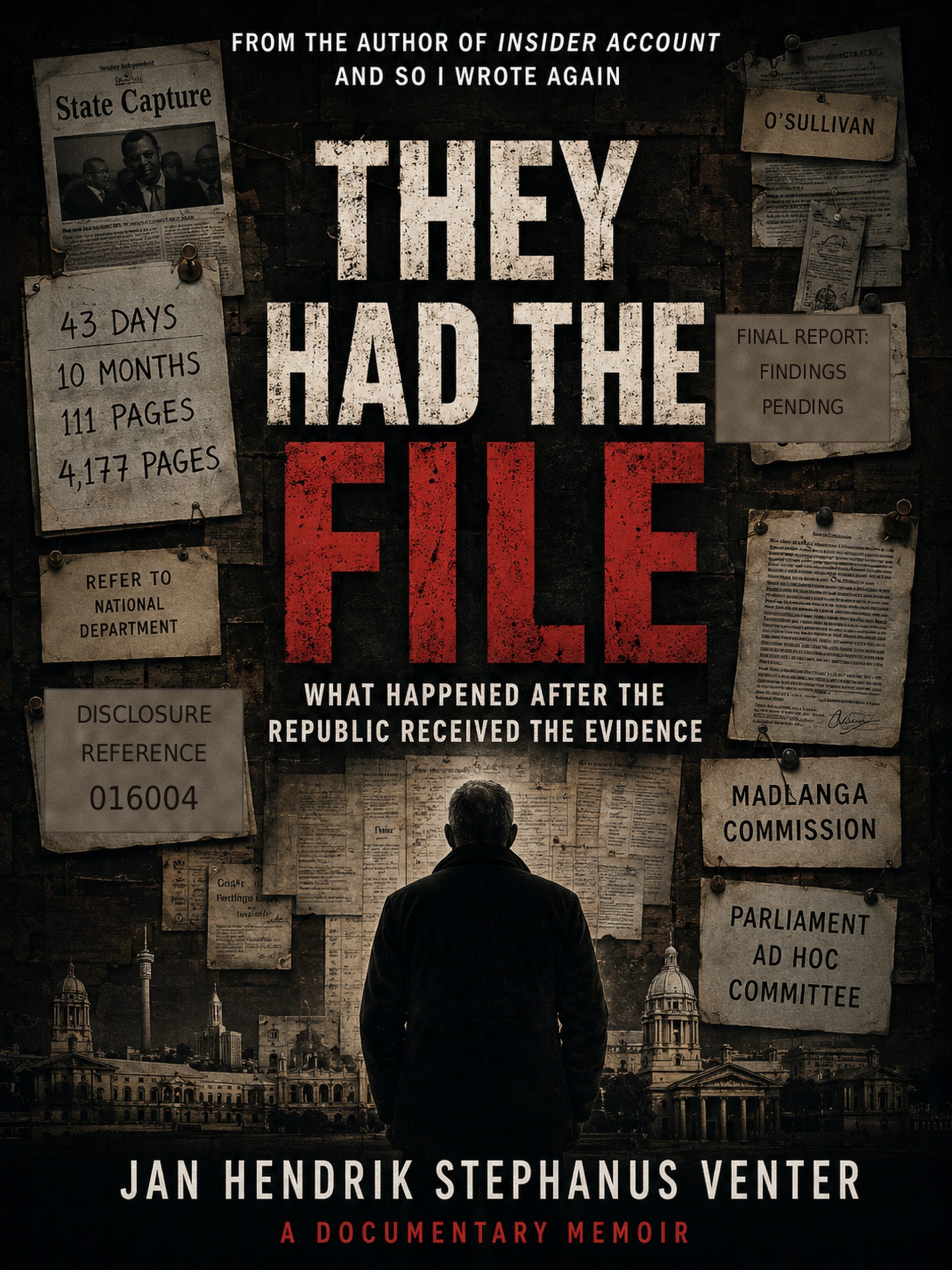
THEY HAD THE FILE
What Happened After the Republic Received the Evidence
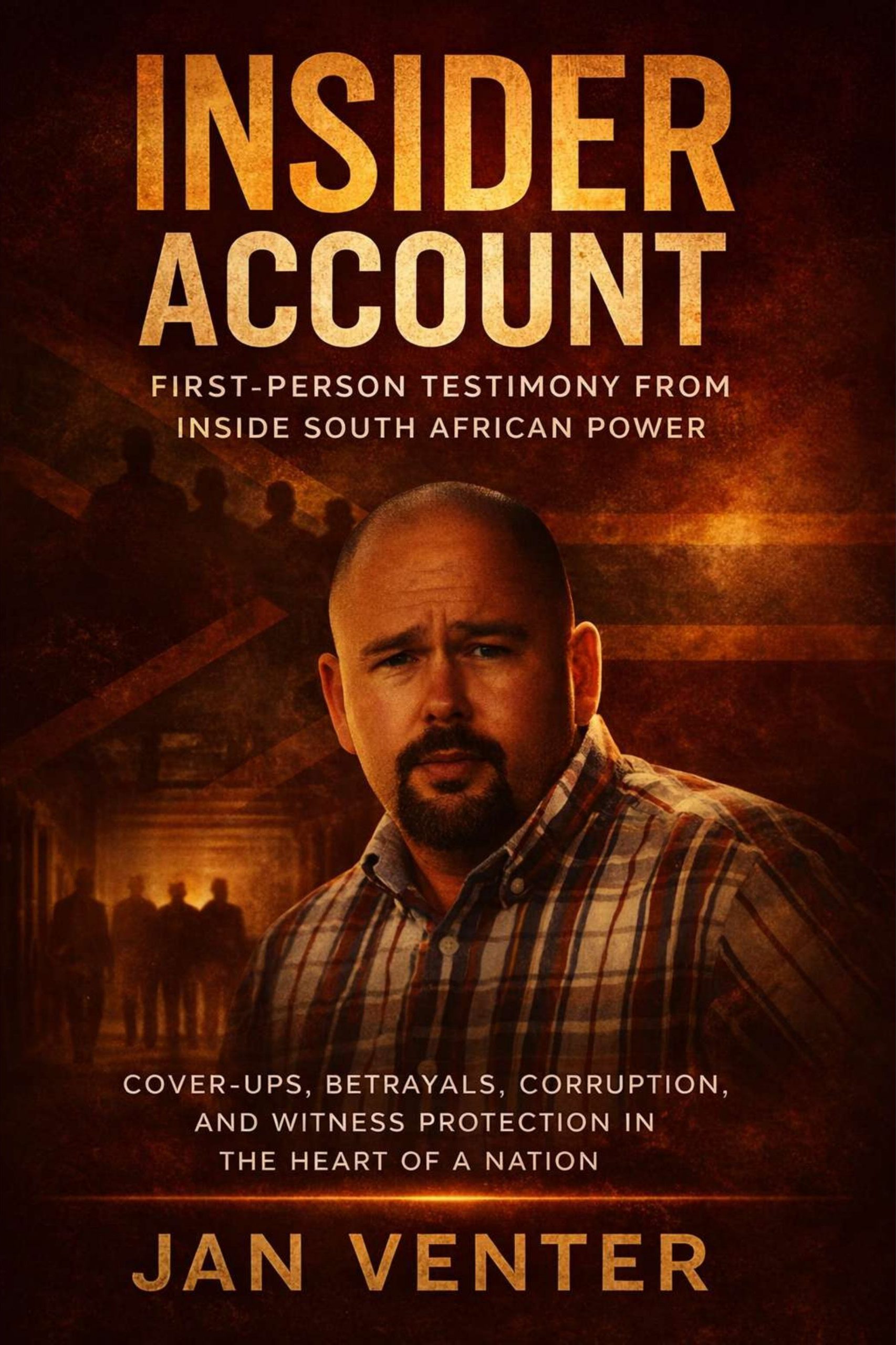
By Jan Venter · South African political nonfiction · Volume 3 of 3
THEY RECEIVED THE RECORD. WHAT HAPPENED NEXT?
The third Exposé memoir follows the documentary trail into institutions with the power to receive, assess, investigate, refer and decide.
Books2Read is the Draft2Digital-powered universal book link. Actual purchase options and local prices depend on each retailer and country; full ebook delivery follows the publication date.
THIS IS WHAT THE BOOK IS ABOUT.
I had already lived the events and gone back through the archive. The next question was institutional: what happens when evidence, complaints and requests for investigation enter the machinery of the Republic?
THEY HAD THE FILE examines my dealings, submissions and unanswered questions involving the DPCI/Hawks, SAPS, National Prosecuting Authority, witness-protection structures, the courts, parliamentary oversight and commissions of inquiry. It follows the difference between a message being received, a file being referred, an investigation being opened and an actual decision being made.
An acknowledgement does not prove the allegation. A complaint does not convict anyone. An official promise does not, by itself, complete an investigation. The book keeps those distinctions intact while demanding that the handling of public-interest information be capable of scrutiny. Its narrative closes on 27 August 2026; subsequent Madlanga Commission submissions are later developments.
NOT A SLOGAN. A FULL-LENGTH MEMOIR.
Institutions under examination
The documented interfaces between the Hawks/DPCI, SAPS, NPA, courts, witness protection and oversight bodies.
The Commission question
Why later public inquiries, including the Madlanga Commission, make source preservation and traceable handling so important.
The accountability test
The gap between receipt, investigation, formal determination and what a complainant or the public can verify.
I WALKED AWAY. I WENT TO THE HAWKS. I AM STILL HERE.
Receiving evidence is not the same as dealing with it. Referral is not a decision. Silence is not an answer.Jan Venter · Exposé
I say I experienced the cost of speaking about South African political power firsthand. I have been criticised, publicly challenged and imprisoned. I will not apologise for telling the truth as I know it and can support it, and I will not abandon my right to dignity or my determination to ask difficult questions. Readers are free to test my account against the documentary record.
The larger issue is not whether one narrator can persuade everyone. It is whether people who come forward with concerns about powerful institutions are heard fairly, whether evidence is examined, and whether the public can demand accountable answers. That question belongs to South Africans and to an international readership.
THE REALITY BEHIND THE POLITICAL HEADLINES.
This trilogy draws readers into the working reality, the personal cost and the institutional consequences of life around South African political power. The books examine witness protection, whistleblowing, the DPCI/Hawks, the National Prosecuting Authority, the courts, law-enforcement structures, public oversight and the persistent question of who is accountable when a serious record is placed before an institution.
It is direct, unsparing and unapologetic about the author’s experience—not an invitation to treat accusations as convictions. The memoirs include contested facts, adverse accounts and matters that remain unresolved. Readers do not have to accept every conclusion to understand why the questions matter.
Once the Republic has the file, who will account for what happened to it?
EXPERIENCE. DOCUMENTS. INSTITUTIONS.
Start with the book that interests you. Together the three volumes move from the human account, to the documentary evidence, to the institutions that received the record.
SHARE THE BOOK. SHARE THE QUESTIONS. SHARE THEM WORLDWIDE.
Exposé is not only for South African readers. Share this official book page with journalists, readers, students, researchers and people around the world who want to understand the human and institutional costs of political power. Please share the public book link—not private manuscript files or confidential material.
READ THE BOOK. JUDGE THE RECORD FOR YOURSELF.
THEY HAD THE FILE: What Happened After the Republic Received the Evidence. Complete manuscript. Official electronic ISBN 978-1-0483-7531-2. Scheduled ebook publication: 15 November 2026.
International retailer destinations for THEY HAD THE FILE: Amazon Kindle · Apple Books · Barnes & Noble / NOOK · Kobo · Smashwords · Bookshop.org · Tolino / Thalia · Fable · Vivlio ISBN search. The Vivlio link searches the exact book ISBN; regional store prices, access and pre-order availability may vary. Further retailer options are available through the existing Books2Read button.
Reader note: this is a nonfiction memoir comprising the author’s recollections, documentary references, allegations, interpretations and the existence of disputed or unresolved matters. A memoir is not a judicial determination. Institutional receipt, investigation or other correspondence does not itself establish the truth of an allegation.